
Oecologia 208, 168, https://doi.org/10.1007/s00442-026-06010-4
Involved members of MultiTroph: Finn Rehling, Matteo Dadda, Marc Nagel (student), Georg Albert, Jing-Ting Chen, Heike Feldhaar, Felix Fornoff, Arong Luo, Massimo Martini, Xiao-Yu Shi, Michael Staab, Xianglu Deng, Xiaojuan Liu, Qing-Song Zhou, Chao-Dong Zhu, Alexandra-Maria Klein
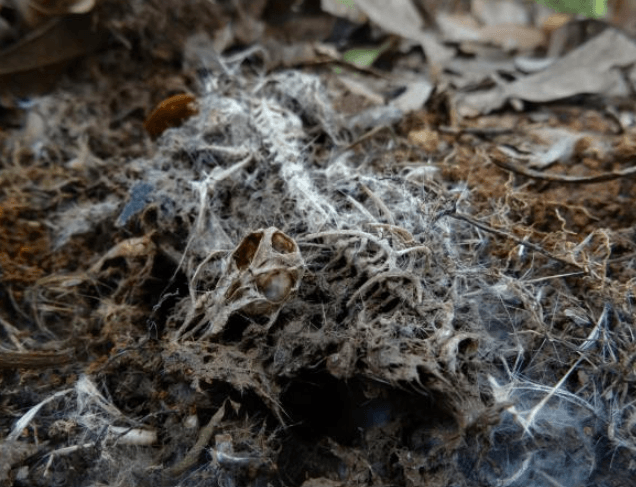
Summary: BEF experiments have focused predominantly on functions directly linked to plants. Here, we investigated how tree species richness influences the decomposition of animal cascasses, through its effect on the environment and communities of insect decomposers. During the monsoon season, ants dominated small vertebrate carcasses, suppressed other decomposers, especially flies, and showed little response to tree species richness. Because carcass decomposition was strongly shaped by these ant–fly interactions, it was only weakly associated with the richness of decomposer or tree species.
Conclusion: These results support the notion that biodiversity-ecosystem functioning relationships may weaken at higher trophic levels because interactions among dominant consumers outweigh diversity effects.